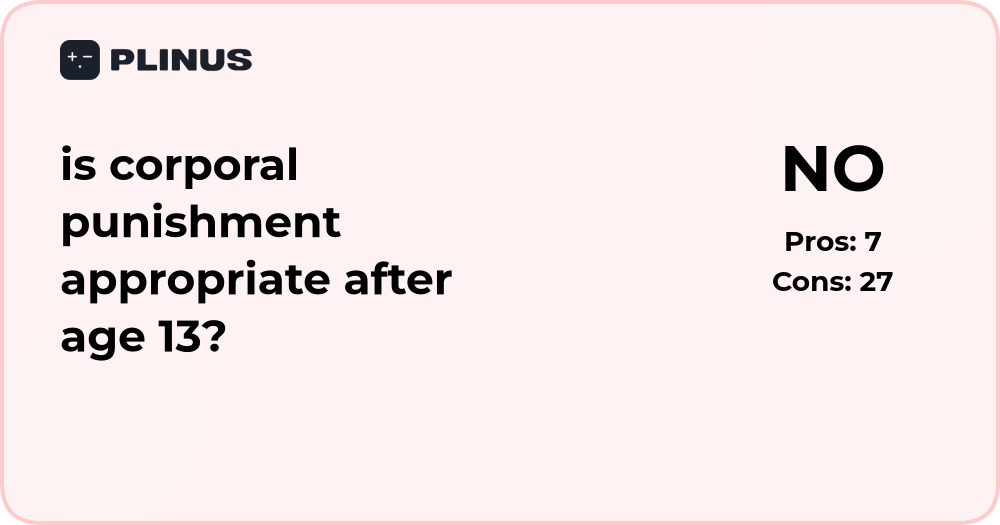
is corporal punishment appropriate after age 13?
Why acceptable:
7 points
Why inappropriate:
27 points
Verdict:
No
Summary
Corporal punishment after age 13 is categorically inappropriate. Psychological, ethical, and social consequences far outweigh any supposed benefits. It should not be practiced under any circumstances.
Recommendation
Corporal punishment after age 13 must be completely avoided. It causes psychological harm, destroys trust, and promotes aggression. Parents should use dialogue, empathy, and consistent non-violent boundaries instead.
Why acceptable (3) • Total pluses score: 7
-
It is acceptable because it can provide immediate behavioral correction when other methods fail.
-
It is acceptable because some parents believe physical discipline enforces respect and boundaries effectively.
-
It is acceptable because cultural or traditional norms in some societies still view it as a moral duty of parents.
Why inappropriate (6) • Total score: 27
-
It is inappropriate because it damages trust and emotional bonding between parent and teenager.
-
It is inappropriate because it teaches violence as a problem-solving method.
-
It is inappropriate because adolescents are highly sensitive to humiliation and may develop long-term resentment.
-
It is inappropriate because psychological studies link corporal punishment to anxiety, depression, and aggressive behavior.
-
It is inappropriate because legal and educational systems in most countries forbid it beyond early childhood.
-
It is inappropriate because verbal reasoning and emotional dialogue are more effective forms of discipline at that stage.
Share