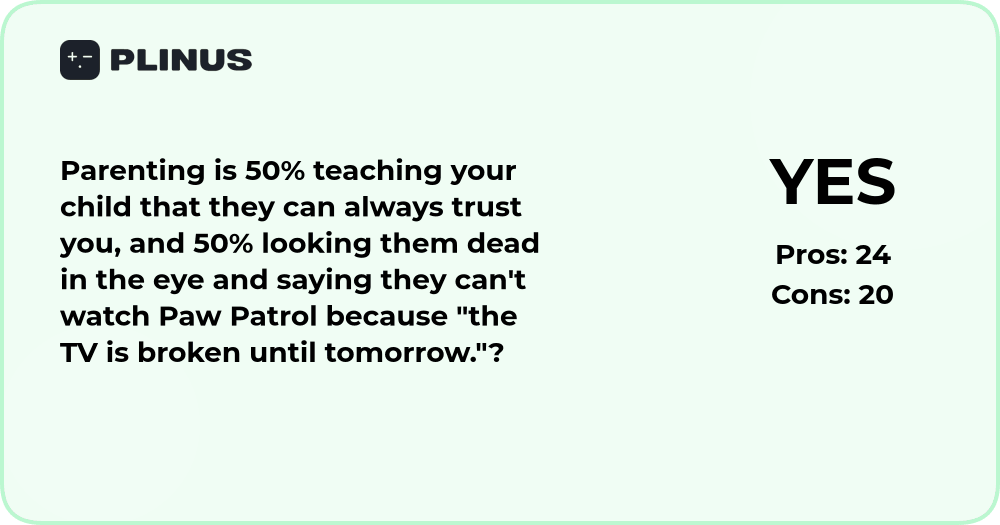
Parenting is 50% teaching your child that they can always trust you, and 50% looking them dead in the eye and saying they can't watch Paw Patrol because "the TV is broken until tomorrow."?
Why acceptable:
24 points
Why wrong:
20 points
Verdict:
Yes
Summary
This evaluation confirms that this parenting behavior is acceptable. Occasional white lies used with empathy and purpose help shape discipline while maintaining harmony, though honesty should remain the dominant principle in family relationships.
Recommendation
I strongly affirm that small, harmless parental lies like saying the TV is broken can be acceptable when used sparingly and with the goal of managing emotional discipline, not manipulation. Use this approach responsibly to preserve trust.
Why acceptable (6) • Total pluses score: 24
-
It is acceptable because small white lies can help parents manage situations without escalating conflict.
-
It is acceptable because it teaches children that not every desire is immediately fulfilled.
-
It is acceptable because such lies can maintain parental authority in a calm and controlled manner.
-
It is acceptable because children gradually understand the concept of boundaries and delayed gratification.
-
It is acceptable because protecting a child’s emotional state sometimes requires softening reality.
-
It is acceptable because it allows parents to model problem-solving under constraints instead of confrontation.
Why wrong (5) • Total score: 20
-
It is wrong because lying can damage trust if a child later realizes the truth.
-
It is wrong because children learn by imitation and may copy deceptive behavior.
-
It is wrong because honesty builds stronger emotional bonds over time.
-
It is wrong because it creates mixed messages: teaching honesty while demonstrating dishonesty.
-
It is wrong because consistent honesty builds a secure attachment foundation.
Share