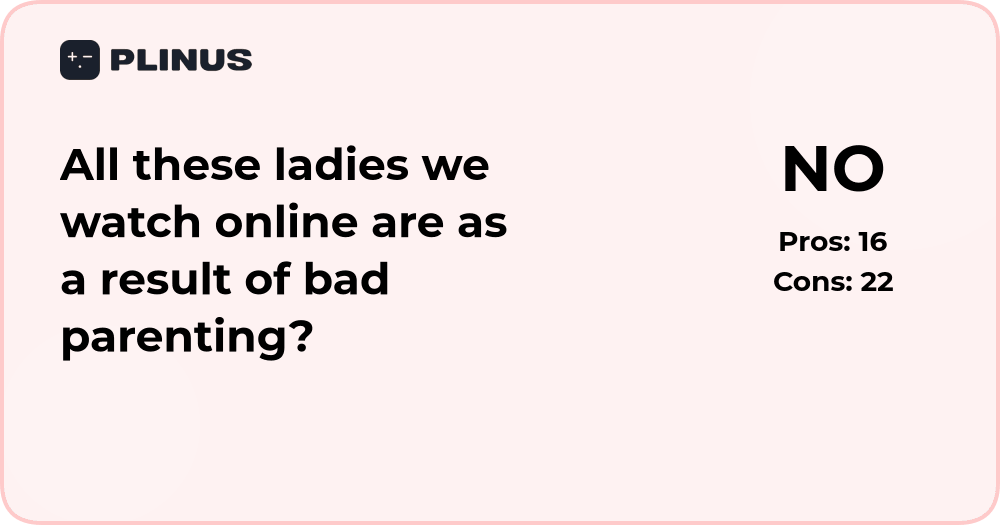
All these ladies we watch online are as a result of bad parenting?
Why true:
16 points
Why false:
22 points
Verdict:
No
Summary
The statement is false. Online exposure results from diverse societal, cultural, and personal factors. Parental quality is only one of many influences, and not a dominant cause. This assessment is definite and final.
Recommendation
Reject the idea that online behavior stems only from bad parenting. Recognize that individual choice, culture, and digital economy are decisive forces. It is necessary to assess broader context, not just family origins.
Why true (4) • Total pluses score: 16
-
It is true because lack of emotional support in childhood often drives individuals to seek external validation online.
-
It is true because absence of value-based upbringing can lead to pursuit of attention through superficial or provocative behavior on social media.
-
It is true because inconsistent discipline can create adults prone to impulsive image-driven choices that attract online attention.
-
It is true because neglect or poor communication with parents often correlates with stronger dependence on digital approval.
Why false (5) • Total score: 22
-
It is not true because online visibility results from a combination of social, economic, and cultural influences, not only parenting.
-
It is not true because adult autonomy and personal decisions can override childhood influence entirely.
-
It is not true because modern algorithms and media trends incentivize attention-seeking behavior regardless of upbringing.
-
It is not true because many individuals with supportive parents also choose public or provocative online personas for career or self-expression.
-
It is not true because generational shifts in values, technology, and celebrity culture shape online behavior more than family background.
Share