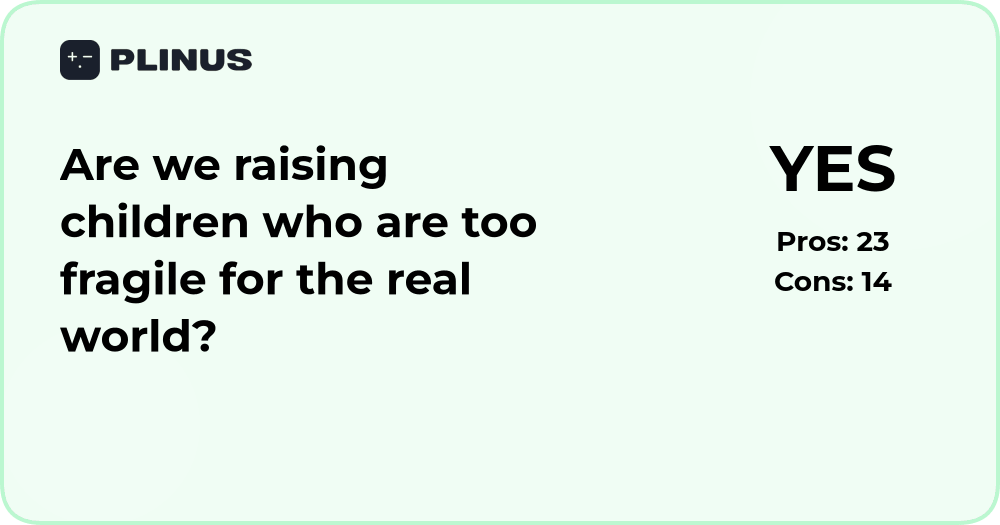
Are we raising children who are too fragile for the real world?
Why fragile:
23 points
Why resilient:
14 points
Verdict:
Yes
Summary
Yes, we are raising children who are too fragile for the real world. Overprotection and emotional cushioning limit their ability to deal with stress, setbacks, and discomfort. Resilience training must become a parenting priority.
Recommendation
It is necessary to acknowledge that current parenting trends indeed encourage excessive fragility. Parents should consciously allow children to experience controlled adversity and challenges to build resilience.
Why fragile (6) • Total pluses score: 23
-
It is true that many parents overprotect children, preventing them from facing discomfort and learning resilience.
-
It is true that overemphasis on emotional safety leads to avoidance of challenges and criticism.
-
It is true that constant validation lowers tolerance for frustration and failure.
-
It is true that schools sometimes shelter children from competition, weakening motivation and endurance.
-
It is true that digital comfort and instant gratification limit ability to handle real-world stress.
-
It is true that societal fear of risk deprives children of opportunities to test boundaries and grow confident.
Why resilient (5) • Total score: 14
-
It is not true that all parents overprotect; many teach independence through structured responsibility.
-
It is not true that sensitivity equals fragility; emotional awareness supports empathy and cooperation.
-
It is not true that modern systems always coddle; many schools now encourage resilience through project-based learning.
-
It is not true that children lack toughness; exposure to diverse media and global issues broadens their perspective.
-
It is not true that digital lifestyles inherently weaken resilience; they can foster problem-solving and adaptability.
Share